Author: Ski NASTC

  • NASTC NEWS May 25, 2012

    NASTC NEWS May 25, 2012


    NASTC’s Annual Portillo Summer Skiing Adventure: August 17-26

    Enjoy face-full after face-full of fresh powder as you ski amidst the towering Andean peaks that surround the transcendent resort of Portillo.  Let the mystical Inca Lake with its ever-changing shades of blue and green lull you into a state of serenity and mindfulness.  There is no doubt that Portillo is a very spiritual location with unique powers of rejuvenation and inspiration.  This is the ideal location for a summer ski improvement camp.  The wild nature of Andes lends to almost endless possibilities for adventure.  You can heli-ski and descend 14,00ft peaks as condors soar above you.  Ski across a frozen lake after descending a 2,000ft pitch of bottomless powder.  Watch the sun set over the Andes while you sip a delightful glass of Chilean cabernet.  Cut loose at the bar where the floor vibrates with everyone’s dancing feet and the live band plays popular tunes.  Out on the hill, you will work closely with your trainer to achieve your ski improvement goals.  Days are filled with a variety of skill development & application and terrain exploration.  If you still want some additional education, you can sit in on any of the number of the presentations by the NASTC coaches.  http://youtu.be/lm5UNB-_3BM

    Rockclimbing and KidsClimb! Camp
    As the temperature keeps rising and the cobalt blue sky that Tahoe is known for is here to stay, rock climbing comes to mind.  Rock climbing is one of the many adventure filled outdoor activities available in the Truckee-Tahoe area.  We run our climbing lessons on Donner Summit, which has world class granite (some of the best rock to climb on) and has stunning views of Donner Lake and the surrounding Tahoe Basin.  Whether you are new to climbing or an experienced climber our attentive guides will show you all the necessary techniques to help achieve your climbing goals and have a fun and successful day out on the rocks.   Please call the NASTC office, 530.582.4772 to book your rock climbing lesson. 

    KidsClimb! Camp – June 29, 9:00am-1:00pm, $75.00 includes helmet, shoes and harness.  This is fun day out on the rocks dedicated to young climbers of all abilities.  The camp will be based at Donner Summit.  Kids can expect to do top rope, single pitch climbs as well multi-pitch for the more experienced climbers, and learn the basics of rappelling and bouldering.  Climbing provides mental as well as physical challenges that each child must work through.  They learn how to self assess, set in-the-moment goals and how to work with a partner for safety and encouragement.  You can register your child online or directly with the NASTC office 530.582.4772.  Space is limited.

    Post-season Training for the Underpowered Skier 

    At this time of year we are trying to rebuild mobility, strength and cardiorespiratory fitness after our bodies have broken down during the course of the season. 

    Functional Movement (Mobility):  3-6 times per week

    Cardiorespiratory Fitness:  2-4 times per week

    Strength, Power, Agility:  2 times per week. 

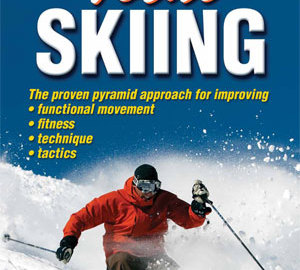
    Maintaining good levels of fitness and mobility will allow you to move right into pre-season training seamlessly.  You don’t have to commit this program to purely gym time, use other sports to cross train like mountain biking, cycling, rock climbing, surfing.  For specific mobility, strength and agility exercises check out Chapter 8 in Total Skiing


  • NASTC Climbing: Group Summits Mt Shasta – 15th year

    NASTC Climbing: Group Summits Mt Shasta – 15th year

    NASTC Climbing: Group Summits Mt Shasta – 15th year
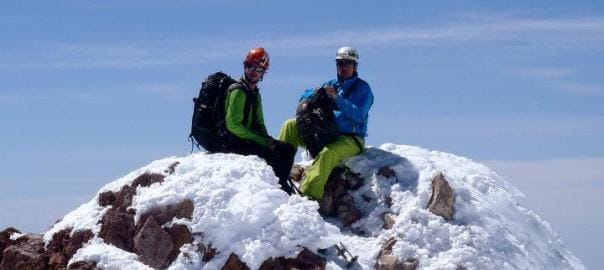
    On Sunday morning May 13, under sunny, crisp skies a group of strong advanced skiers summitted California’s 5th highest peak, the 2nd highest in the Cascade Range: the dramatic and rewarding Mt Shasta.  This represents a huge accomplishment!  When you summit Shasta you have ascended and descended a combined 14,000+ vertical feet in just a weekend. That’s huge! We work with guides from NASTC and Shasta Mt Guides for this 3-day alpine climbing and ski mountaineering trip.  We start at the Fifth Season shop, sort gear, and do a bag check. Once we’re sure everyone is set, we head up to the Bunny Flat trailhead and leave our cars there. We were a group of 4 plus 2 guides: Chris Fellows and Dane Brinkely.  Our group included 3 climbers who flew all the way in from Mexico, from a new partner program called Ski Madness (stay tuned for some big mountain skiing they’re going to be doing with us around the world).  In addition to Pablo, Joan, and Luis, our man Jack drove in from San Francisco and completed the well-rounded, fun group.  They all headed up to Horse Trails and made camp the first day, did some ice axe and crampon skills work, and a short climb before dinner.  The second day they did a more significant tour in order to continue to acclimatize. One of the forces that gets people on Shasta is the altitude and certainly if you come from sea level you have your work cut out  for you.  Around 10 or 12,000′ we humans start to “feel it.” Its an indescribable feeling: lethargic, lackadaisical, low-energy.  Makes it extra challenging to get to the top of a 14,000 peak! So they pushed through and after the tour, more skills work, and an early dinner it was off to bed. Alarms rang at midnite and the guides got the hot water going.  By 1:30am they were suited up: crampons? check, headlamps? check, moleskin? check. beacons on transmit? check.  Off they went.  Nine hours later – via the Helen Lake route – they were on the top and staring across the state’s open expanse beneath.  Its an amazing feeling being up there.  They had an epic, great ski down – perfect conditions for 6,000 vertical feet – then broke camp and made their way to the cars.  Good job everyone!
    Here is what one of the climbers had to say: “It was an awesome experience…  Chris is an amazing human being, guide, skier and friend.  I could not ask for more…The mountain is impressive, the views astonishing, the runs long and fun…What a journey!  We will be back exploring other routes.  Thanks again a lot for all you did for us.”


  • Skiing South of the Border

    Summer Skiing South of the Border
    www.skinet.com 

    Don’t put your skis away just yet, there’s still plenty of skiing to be had in 2012.

    We certainly won’t blame you for pulling out the bicycles, the golf clubs and the kayaks—heck, that’s what we did this weekend as temperatures in Boulder reached the upper 70s—but don’t write this year off as a wash just yet. There’s no correlation between winter weather patterns in the Northern Hemisphere and those below the Equator, which means this might be the year to pack your bags and head south.

    It’s easier than you might think, especially with help from American tour operators who will not only book your flights, hotels and ground transportation but, best of all, will also set you up with expert guides who speak the language and know where South America hides her best stashes. If that’s not enticing enough, how about a little star power, like personalized instruction from Warren Miller athletes Ingrid Backstrom and Wendy Fischer or SKI instruction contributor Chris Fellows? The pros know: When the going gets tough, the tough go to South America.

    NASTC Summer Skiing Adventure
    Ask anyone about Portillo, and your bound to hear how magical it is. Ask NASTC’s Chris Fellows, and you might never hear the end of it. He and his crew of top instructors have been leading clinics in Portillo for nearly 20 years. NASTC’s clinic is three-pronged, focusing on technique, fitness and equipment.

    Areas visited: Portillo
    When: Eight days, Aug 17–26, 2012
    Price: $4,390
    Trip includes: Roundtrip ground transportation from Santiago, seven nights of lodging, four meals per day, seven-day lift ticket, six days of instruction in groups of six or less
    Book: skinastc.com

  • A Day in the Life of a World Class Athlete

    A Day in the Life of a World Class Athlete

    Read original article here: http://online.wsj.com/article/SB10001424052702304746604577384021387990452.html

    Killer Pull-Ups, Brutal Sprints and a Nap for a Ski Champ

    By MATTHEW FUTTERMAN

    [WORKOUTjp] 
    Mark Meyer for The Wall Street Journal

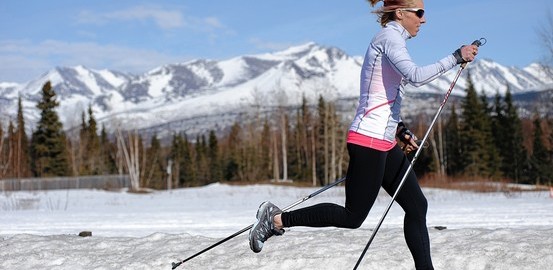
    During her off-season, Kikkan Randall will run for 90 to 150 minutes on the rolling trails at what she calls a ‘conversational pace’ of eight-minute miles.

    For Kikkan Randall, a cross-country skiing world champion, working out in the off-season is about far more than sliding across the snow.

    Ms. Randall spends spring and summer trying to build the explosive strength her grueling event requires. “I take a couple of weeks off and go to Hawaii, and do some biking while I’m there,” she says. “But by May 1, I start training.”

    Ms. Randall, the world sprint champion for the 2011-12 season, is a major star in Northern Europe, where cross-country skiing is one of the most popular sports. In the U.S., it’s something of an afterthought, even back home in Alaska, where she spends most of her off-season.

    WORKOUTjp

    Mark Meyer for The Wall Street Journal

    Cross-country skier Kikkan Randall does pull-ups with a 60-pound weight tied to her waist.

    Her regimen is a brutal, six- (sometimes seven) day-a-week mix of roller skiing, biking, running and strength training. Pull-ups are a fairly unpleasant experience for most humans, but the ones Ms. Randall does resemble a form of medieval torture. She straps on a belt with a chain dangling from it and attaches a 60-pound weight to it. Or she’ll pull herself up with such power that she is able to clap her hands above the bar and then grab it to slowly lower herself. Eight is her record. “There’s nothing that makes you feel more hard core than strapping on a belt and attaching a big weight to it,” she says.

    The training’s big payoff arrived in March, when Ms. Randall, 29 years old, became the first American woman to win a season-long world championship in a cross-country skiing discipline. Her next goal is to become the first American woman to win an Olympic medal in cross-country, a sport Scandinavians, Germans and Russians have dominated. The U.S. hasn’t medaled in cross-country since Bill Koch won silver in 1976.

    The Workout

    Ms. Randall does two workouts each day. She trains with a private cross-country skiing club at Alaska Pacific University. She meets the team at 8:30 each morning for what is usually a 2½-hour workout on roller skis. Once a week, the team has a session that lasts as long as four hours and can include runs of 12 to 15 miles on mountainous terrain.

    WORKOUT4

    Ms. Randall does strength training at a local gym twice a week.

    During the regular session, Ms. Randall and her teammates spend the morning skiing intervals up and down the area’s hills. They will often cover more than 25 miles in a morning with ease, though the distance varies depending on whether the team is working on endurance or speed. Speed work requires interval training, which can be multiple one-minute bursts of sprinting with little rest in between.

    The danger, Ms. Randall says, is the skis don’t come with brakes, and skiers can reach 45 miles per hour on them. “If you have to stop suddenly, you pretty much have to dive off the road,” she says. “That’s why you wear a helmet.”

    After lunch and a nap, she works out on her own. Twice a week she does strength training at a local gym, though even that 90-minute session begins with a 30- to 60-minute run or roller ski. She says half of her exercises are weight-training focused on specific muscles, while the other half is focused on strengthening her core balance.

    That’s where the pull-up bar comes in. Ms. Randall will hang from the bar, bring her legs up into a pike position, then slowly lower them repeatedly. She’ll do the same routine with weights strapped to her ankles. Then, keeping her ankles together and her legs raised, she’ll swing legs back and forth in front of her face like windshield wipers. “Just as I start to get good at something, my trainer figures out something to add to make it harder,” she says.

    On other days, she works on her endurance, either roller-skiing or running for 90 to 150 minutes on the rolling trails near her house at what she calls a “conversational pace” of eight-minute miles. She’ll often run with ski poles, and, this being Alaska, bells or pepper spray to ward off bears or moose. “The moose have this incredible knack of getting in between me and my car right at the end of my runs,” she says.

    WORKOUTjp

    She also works in long-distance cycling, doing road work in the summer and mountain-biking in the fall. The off-season includes a two-week ski camp in May in Bend, Ore., and another weeklong camp on Eagle Glacier in Alaska in June, where she skis five hours a day.

    This year, she will put in 10 days of skiing in an indoor ski tunnel in Sweden in August, then do a weeklong camp in Fairbanks, Alaska, in late October.

    The Diet

    The basic formula for Ms. Randall’s diet is protein and carbohydrates during every meal and snack, with more carbs earlier in the day and more protein in the evening and before and after a weight workout.

    She starts her day with an early breakfast around 7 a.m. of an egg-white omelette with fresh vegetables and whole-wheat toast. Coffee, too, is a must.

    During workouts, she will snack on Power Bars and an energy drink, such as Gatorade. For lunch, Ms. Randall often has a ham or turkey sandwich with vegetables.

    Dinner involves another serving of protein and fresh vegetables. She grills salmon or another meat in her backyard and makes a big salad filled with foods she struggles to find on the road: spinach, avocados, dried cranberries and peppers. Dessert is a scoop of mint-chip ice cream.

    The Nap

    Ms. Randall is religious about her daily nap, which can last up to two hours. Napping allows her to train as hard as she does. Growing up in Alaska, she is accustomed to falling asleep in bright daylight so she can get her usual eight to nine hours of sleep each night. “It can drive everyone else crazy, but all I need to do is climb into bed and close my eyes and I’m out,” she says.

    The Gear

    The Marwe Roller Skis she uses during training retail for about $349. Her LeMond Zurich road bike cost $2,860 and her Gary Fisher Cake II mountain bike lists for $2,089.

    The Playlist

    Ms. Randall is loyal to the goddesses of pop. Kelly Clarkson’s “Stronger (What Doesn’t Kill You)” is wearing out her headphones these days.

    Motivation

    She’s been dreaming of an Olympic medal since she was a teenager and she is expected to be a favorite in the 2014 Winter Olympics in Sochi, Russia, where competitors will race in the freestyle form, moving as if on skates, that Ms. Randall specializes in. “I wasn’t even alive when the last American won a medal,” she says. “So it would be pretty cool to win the next one.”

  • US Alpine Team Announces Coaching Changes

    Read original article here on skiracing.com http://www.skiracing.com/?q=node%2F12359

    US Alpine Team Announces Coaching Changes

    The formal announcement of adding 32 years of Austrian coaching experience to the US men’s team, and a slight realignment of the women’s coaching ranks has been issued from headquarters at Park City.

    As Ski Racing reported a month ago, the alpine men’s team added coaches Andreas Evers and Bernd Brunner as well as former racer TJ Lanning. Evers heads the men’s speed group. Brunner will head up a newly formed World Cup B training group and Lanning will work with Evers and the speed group.

    Leaving the program is Chris Brigham, with the team since 1994.

    The women’s team realigned a bit assigning Jeff Fergus to work specifically with Lindsey Vonn and Chris Knight with Julia Mancuso. Chip White will follow up a Coach of the Year season with the speed team with Roland Pfeifer returning to head up the technical end of things.

    Program Director Patrick Riml said, “Andreas (Evers) was extremely successful as a coach with Austria and that brings a tremendous amount of value to this program. He also brings high expectations and will work with each of the athletes to find ways to help them perform at a high level.”

    It also hopefully means he won’t be setting any courses like last season’s super G at Beaver Creek. Evers set a trap for the highly charged home standing Americans last season enticing the top US racers to eliminate themselves from competition.

    Brunner worked earlier in his career with Vermont’s Green Mountain Valley School making him familiar with the US program. Riml said, “He has a great plan for getting our athletes to perform on the World Cup quicker.”

    Evers, Brunner and Lanning were on snow with the athletes during their first camp of the prep period, which closed May 13 in Mammoth Mountain, Calif. “The athletes had some time to work with Andreas (Evers) and Bernd (Brunner) in Mammoth last week and we’re already seeing the benefits they bring to the table,” said head coach Sasha Rearick.

    “They’re both very calm and bring an incredible amount of experience and perspective to this program and have a great feel for what each athlete needs to perform at their highest ability.

    “We’re also incredibly lucky that TJ (Lanning) chose to make the transition from athlete to coach. He has a tremendous spark and is extremely competitive with a great eye for skiing. He has a familiarity and respect with the athletes that you can’t teach and that inspires everyone to be improve.

    “What we gain in adding a World Cup B program,” continued Rearick, “is freeing Mike Day and Forest Carey to work with our top six performing athletes on the technical side – Bode (Miller), Ted (Ligety), Tommy (Ford), Tim (Jitloff), Will (Brandenburg) and Nolan (Kasper).

    The women’s program didn’t change significantly. “Chris (Knight) and Jeff (Fergus) worked well with this system last season and we saw a direct boost in Julia (Mancuso) and Lindsey’s (Vonn) performances,” said Riml. “It’s their responsibility to put together plans that make sense for those athletes.

    “Both Chip (White) and Roland (Pfeifer) did a great job in leading their programs last season and we’ll look for them to set new high markers for their athletes. And there is a great plan now in place with Trevor (Wagner) and Seth (McCadam) to get our younger athletes performing in the disciplines where they are showing the most talent.”

    Women’s head coach Alex Hoedlemoser said: “The multi program provides more freedom for Lindsey (Vonn) and Julia (Mancuso). They are the best in the world and we want to keep them there. Now we have a plan and budget in place to make sure they get exactly what they need to stay on top.

    “The experience and passion that both Chip (White) and Roland (Pfeifer) have for coaching directly translated into the success that those programs saw last season. Now it’s up to them to keep those athletes performing and bring a few more along that are right on the cusp of success.”

    2012-2013 MEN’S U.S. ALPINE SKI TEAM COACHING STAFF

    Program Director: Patrick Riml
    Head Coach: Sasha Rearick

    World Cup Speed
    Head Coach: Andreas Evers
    Assistant Coach: Tommy Eckfeldt
    Assistant Coach: TJ Lanning

    World Cup Technical
    Coach: Forest Carey
    Coach: Mike Day
    Giant Slalom Coach: Dane Spencer
    Slalom Coach: Josh Applegate

    World Cup B
    Head Coach: Bernd Brunner
    Assistant Coach: Ben Black

    Europa Cup
    Head Coach: Peter Korfiatis

    Development
    Head Coach: Randy Pelkey
    Assistant Coach: Ian Garner

    2012-2013 WOMEN’S U.S. ALPINE SKI TEAM COACHING STAFF
    Program Director: Patrick Riml
    Head Coach: Alex Hoedlmoser

    World Cup Speed
    Head Coach: Chip White
    Assistant Coach: Andi Moser
    Assistant Coach: Wade Bishop

    World Cup Technical
    Head Coach: Roland Pfeifer
    Assistant Coach: Pete Anderson

    Multi Discipline
    Coach: Jeff Fergus – Lindsey Vonn
    Coach: Chris Knight – Julia Mancuso

    Europa Cup
    Head Coach: Trevor Wagner
    Assistant Coach: Jeff Pickering

    Development
    Head Coach: Seth McCadam
    Assistant Coach: Mike Prado

  • For Left promo box in Fall

    For Left promo box in Fall

    Total SKIING
    Written by Chris Fellows, two time member of the PSIA National Alpine Team and director of the North American Ski Training Center. Total Skiing was developed specifically to increase your skiing performance by addressing the strengths and weaknesses in your fundamental movements, equipment selection, your tactical choices and technical execution on the hill.  BUY NOW! 

  • 10yr old Bouldering Champion

    Check out this little girl – she is quite an inspiration.  A 10yr old bouldering champion.  If she inspires you to get out and learn how to climb, check out the climbing opportunities with NASTC. 

    http://www.facebook.com/l.php?u=http%3A%2F%2Fvideo.nytimes.com%2Fvideo%2F2012%2F05%2F12%2Fsports%2F100000001512042%2Fashimas-ascent.html&h=DAQGXnwV5AQHe44gvjWHXPSP7aBcdML7Q4qqXLjhyXK33HA

  • Portillo in Forbes.com

    Portillo Powder
    Everett Potter, 05.21.12, 6:00 PM ET

    The Hotel Portillo lies on the shores of the Lake of the Incas in the treeless Chilean Andes, 9,000-plus feet above sea level and a two-hour drive from Santiago. It is painted a jolting Crayola yellow and blue, possibly to catch your eye during a whiteout. It is the centerpiece of a remote and raw landscape of rock and snow, overseen by condors with 11-foot wingspans who slalom the thermals around 19,000-foot peaks.

    There is no town, no boutique scene and nowhere to walk to except La Posada, a truckers’ brothel turned bar. Yet it is the social hub of Southern Hemisphere skiers. It attracts the hard-charging national ski teams of the U.S., Canada and Austria for training weeks. There are supermodels on photo shoots and trustafarians on holiday, along with well-heeled families from Buenos Aires and São Paulo. There are Germans and English, as well as Manhattan brokers on buddy trips, flying ten hours from JFK for a week of powder and a chance for international mingling.

    This will seem even odder when you see the rooms, which predate minimalist and verge on the monastic. They lack TVs or radios, and have small windows with a view of the cobalt blue sky and blinding white terrain. That, of course, is why all social roads lead to the cavernous living room of the 450-guest hotel, which at times seems like the game board for a nonlethal game of Clue.

    Portillo is indeed a cross between a club and a house party, where the buff and sometimes famed members of the ski teams (yes, that is Lindsey Vonn using her iPad in the lobby) hang out with average folk, assuming your definition of average folk includes Oxford-accented skiers and doe-eyed young women from upper-class Chilean homes.

    “I come up every weekend from Santiago,” says Mario Lobo, the director of the Rothschild-owned winery Los Vascos, who laughs like Peter Lorre at the pleasurable thought.

    But Portillo is also about family. There are kids underfoot–sometimes a lot of them, most of them well-behaved in a way that we’ve largely forgotten how to teach in North America. Once they’ve made friends, which should take all of half an hour, they roam around the 63-year-old property, exploring the subterranean basketball court, the movie ­theater and games room.

    Ultimately, everyone is here for world-class skiing that requires hiking and nerves of steel on the Roca Jack lift, which shoots you up the mountain like a 1930s carnival ride. In a good snow year–remember, that’s June through October down here–there are three-day storms that leave 6 feet of snow. There are no lift lines–honest–because there are only 450 guests.

    You’re assigned a table and a waiter for the week, by a staff that is professional and has likely worked at Portillo for decades. If your parents brought you here 40 years ago, the current bartender and maître d’ would have pinched your cheeks back then. Every night the Purcell family, the Americans who have owned the place since 1962, can be found at the second banquette on the right, friendly and approachable. The food is good in that simple Chilean way–think grilled meats and fish–and the wine list blessedly heavy on the country’s top vineyards.

    You make generalizations at Portillo because they seem to be true. Brazilians tend to sleep in and are invariably the best dressed at any time of the day, Argentineans never lunch before 1 p.m., and Peruvians are the most formal guests of all. Since the disco closes at 3 or 4 or 5 a.m., “first tracks” means 10:30 a.m. or maybe 11.


    Lunch is on the terrace at the rustic Tío Bob’s, with more grilled meats the rule. It has a panoramic view of the mountains and the cartoon-colored hotel below.

    Après-ski you go for the babble of conversation in the large outdoor pool and the alfresco hot tub. Or a little afternoon tea. Or maybe a massage from Carmen Bequearelli, who may well have learned her trade from working on both local truckers and Lycra-clad athletes.

    The first seating for dinner isn’t until 8, the second at 9:45. That gives you plenty of time for a Pisco sour in the bar, which was designed in 1965 by Patricio Guzman from Desilu Studios. You might not see Ricky and Lucy, but you will see a former ambassador chatting with a Swiss ski instructor, or perhaps an Argentinean winemaker talking with young Canadian skiers or Irish snowboarders. It feels classless, even if it is not. But it is truly as close to a genuinely international hotel as you’ll find anywhere in the world today.


  • Headed up Mt. Shasta

    Ever fancy what it would be like to summit a 14,180ft peak?  Right here in our extended backyard is Mt. Shasta, the second highest peak in the state of California.  NASTC and our newest partner Ski Madness – Mexico will be running a 3-day expedition style trip up Shasta.  Chris Fellows will be leading the group along with fellow guide Dane Brinkley.  The group will climb up to basecamp on Day 1.  There will be a mountaineering skills refresher in the afternoon.  Day 2 will be an acclimation day, the group will do a couple of short climbs, and learn how to work together as a team as well as how to walk together on a rope line.  Day 3 is Summit Day, the goal is to reach the summit before noon and then ski down as a group back to basecamp.  This will be an exciting trip, stay tuned for details and pics.

  • PSIA 2012 Alpine Team Selections

    Being a part of the 2012 PSIA Alpine Team selection was a special experience, I’m not sure I have even come down from my high of participating in such a tough and rewarding event.  Snowbird is a BIG mountain, lots of terrain, lots of vertical and steep.  This is coming from a girl that skis Alpine Meadows & Squaw Valley on a regular basis!  The first few days before the tryout was spent getting the lay of the land, understanding how long it took the snow to get soft, which pitches got sun first and which ones stayed frozen (and then skied the frozen ones first), discovering how much acceleration you got or not out of certain pitches during different times of the day.  Much like inspecting a course in ski racing, we inspected the whole mountain.  There were pods of candidates skiing around and checking out the competition. 

    The selection process began on Sunday, April 22 with a welcome reception in the Cliff Lodge.  At the reception we found out which group we would ski in, all the candidates were split into two skiing groups and then 4 smaller teaching groups for Days 1 & 2.  The reception was very low key, except you could feel everyone’s nerves and anxiety in the room.  The message was repeated several times that you had to be the best to simply be standing in the room.  Although encouraging, I don’t think it really eased anyone’s nerves. 

    I fell into a shallow sleep that night as we were meeting at the tram plaza at 7:45, they opened the tram an hour earlier just for us.  The snow conditions were very tough as temperatures were shooting into record highs before noon and they wanted the skiing done shortly after lunch as the snow conditions were pretty sketchy.  At 8:00am, Monday morning all 42 candidates and 12 selectors loaded up the Tram.  There was so much excitement in the air, despite how early it was.  The group split up into their respective skiing groups and explored the terrain and snow as we did our warm up runs.  Everyone met at the bottom as we could not miss the 8:30am tram.  This tram was even tighter packed as PSIA staff members and bystanders and support crew loaded the tram with us. 

    We split up into our skiing groups at the top and followed the selectors to our first station:  One legged garlands.  Everyone was nervous, the chatter diminished significantly as the first person stepped up to the starting point.  As it came to be my turn, my heart was thundering in my chest, my hands and legs felt shaky.  I took three deep breaths and then pushed off.  By the third set of garlands, I had calmed down and got into my groove.

    The tension broke after that first task, and our whole group bonded around it.  From that moment on we cheered for eachother, encouraged one another and even cracked jokes to keep everyone loose and relaxed.  I gotta say I never laughed so much during a competition.  What it felt like to me, was that we were not competing with eachother but  with ourselves and everyone was encouraging each other to summon their best. 

    Day 1 consisted of precision and accuracy tasks and a Movement Analysis session.  Later that afternoon our impromptu indoor sessions began.  You pulled a topic out of a hat for which you had 5min to prepare a talk on and then present to the group. 

    Day 2 was the same schedule as the previous day, except the skiing tasks were different.  Our first task of the day was a dynamic medium radius turn on a frozen black diamond pitch.  It was certainly slick, and all I could do was trust in the tuning work of my skis.  I could hear echoes of the coaching I had received for this exact situation.  After a big deep breath, a double click of my poles, all I could hear was the sound of my skis on the snow, it was so loud.  That evening the indoor presentations began. 

    Day 3 on the snow involved sharing one of your core beliefs about skiing through a 30 min on-hill teaching presentation.  What threw a wrench in the plans was that the mountain was only going to be open from 8:00am-2:00pm as the conditions were too dangerous in the afternoon.  The remainder of the indoor presentations were completed.  We were in the home stretch!

    On Day 4 we were split up again into 4 groups of 10 or so.  Our mission was to crank out 10 minute impromptu teaching progression.  Again, we pulled topics out of a hat and worked our magic.  Our group was so motivated to get this over with that we knocked out all our teaching progressions by 11:30!!  We took a couple of victory laps, and wouldn’t you know it, headed straight for the mank on our first victory lap – as if we hadn’t had enough of it already! 

    It was great to finally meet in person and get to know the names of so many people I had just heard of.  It was hard to not be starstruck at moments when meeting some true legends.  It was very moving to share such an experience with so many talented and warm hearted individuals.  There was not one person that I did not meet, that I wouldn’t want to be friends with.  We are blessed in our little community of ski instruction to have such kind, passionate and inspirational individuals.  Congratulations to the PSIA 2012-2016 Team Members, you guys are outstanding indviduals and I look forward to skiing and hanging out with you all in the future. 

    By: Kim Mann