Author: Ski NASTC

  • Sign up for this weekend’s All Women Sports Camp!!

    Attention NASTC Nation!! Sign up for this weekend’s
    All-Women Sports Camp here in Lake Tahoe at Northstar!
    Fri-Sun, August 10 – 12


    Grab your girlfriends and join our good friends at the AWSC for a weekend of inspiration, camaraderie and a lot of laughs while learning a new outdoor sport (or sharpening the skills of your current favorite sport) in the beautiful setting of Lake Tahoe, California.

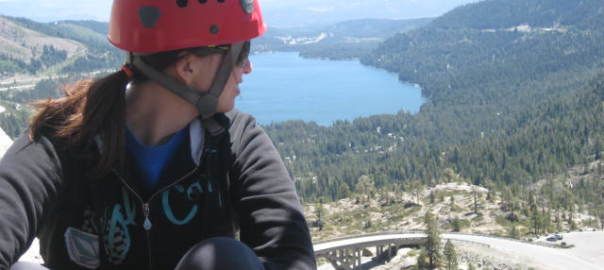
    Their lineup of professional women athletes & industry instructors will lead over 22 different clinics, group rides and group runs – building confidence and increasing the fun and skill in women’s cross-country mountain biking, road cycling, triathlon, running, downhill mountain biking, stand-up paddling and rock climbing (yes, NASTC is offering the rock climbing portion so come see us).


    This awesome weekend is for Beginners to High Intermediate Levels – in all the sports offered.


    For more information, log on to: www.allwomensportcamp.com

  • Looking for An Adult Summer Ski Camp?

    Looking for An Adult Summer Ski Camp?

    The North American Ski Training Center (NASTC) based here in Truckee, CA runs a weeklong adult ski training camp in Portillo,Chile.  NASTC brings the top ranked instructors from the U.S to coach the weeklong ski program.  The camp focuses on freeskiing skills and breaks down your technique to help you build a stronger skillset and overcome the proverbial plateau.  The camp’s theme is to improve one’s comfort on all types of conditions and terrain.  Groups are small and intimate which means lots of 1:1 coaching time with your trainer.  Portillo offers an endless supply of terrain including the ideal ski in/out setting.  Not to mention Portillo has a lot of inspiring history to draw from and its guests include businessmen from Brazil, music producers from New York, snow enthusiasts from Europe and North America and of course the U.S and Austrian ski teams.  For many reasons Portillo is the ideal training ground, its isolation way up in the Andes offers breathtaking views and almost bottomless powder, due to its expansive off-piste terrain, it’s hard not to get some fresh tracks after a storm. 

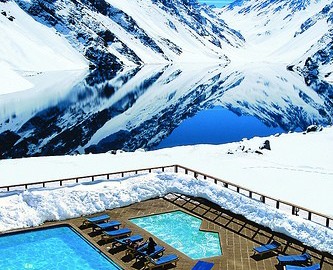
    This is most certainly not the ski camp your kids go to.  Meals involve gourmet creations from the hotel’s heavily lauded restaurant.  When you walk through the door at the end of the day you hand your skis and boots to a valet that stores them overnight for you.  There is a bar with live music every night as well as a nightclub if you have ambitions to dance till the sun rises.  A heated outdoor pool and hot tub where you can take in the spectacular sunset over the Inca Lake. 

    At the end of the week, not only will your skiing skills be stronger than ever but you will feel relaxed, rejuvenated and inspired, it’s all part of the magic of Portillo. 

    photo courtesy of Ski South America

  • The perfect summer day in Tahoe

    The perfect summer day in Tahoe….

    There are so many options to what that day could look like.  Maybe it includes a serene paddle on the cobalt blue water of Lake Tahoe, enjoying in the tranquility of the morning followed by a hike to one of Tahoe’s peaks.  It might include a morning of rock climbing on the finest granite in Northern California on Donner Summit.  NASTC has fun certified guides to help you learn the basics or guide you on some of the more challenging and exciting climbs.  Maybe round off the day with a mtn. bike ride through some of Tahoe’s meadows or enjoy a sunset kayak paddle session or simply relax and enjoy a picnic on the beach and the soothing blue vista of the lake. 

  • A Skier Learns to Climb through Fear

    A Skier Learns to Climb through Fear

    A Skier Learns to Climb through Fear
    By Kim Mann

    Probably up until now, I was never really drawn to the sport of climbing.  Some of you are saying “Why on earth on not?”  I’m not sure really why I wasn’t into it, maybe it was my perception of the sport that it wasn’t exciting enough, or too scary or physically too hard.  I’m a skier, I like feeling the forces in a turn and going fast.  As I started seriously training in the off-season to improve and sustain what I do in the winter, my mentality changed.  I started to actually enjoy pushing myself physically and breaking through my own boundaries.  Climbing began to pique my interest.  After a big ski accident about a year ago, I developed a more heightened sense of fear.  More so, a fear of exposure.  I found myself several times over the season on traverse lines or cornices that were above big rocky drops, I found that my breathing became shallow, the grip on my poles became tighter and I felt a subtle twitchiness all over my body that came from adrenaline being injected into my system.  Not to mention the feeling of my heart pounding even harder in my chest that I could hear my heartbeat in my ears.  This is an unusual place for me to be, as I have always trusted myself and my skis on exposed lines and pitches.  I don’t think I focused on the consequences and just paid attention to the task at hand, because intuitively I knew if I did that right, all would be good. 

    I read somewhere that “Courage is not the absence of fear, but the ability to move past your fear.”  I was inspired by that phrase and decided to do something to conquer this fear I developed.  I knew climbing was the epitome of being exposed.  I mean, how much more exposure can you get if not clinging to a crevice in a rock hundreds of feet off the ground.  I was comforted knowing that I would be roped in; no way would I even conceive of attempting it, if there wasn’t a safety net of some sort. 

    I called up NASTC’s lead climbing guide because I knew I could trust him to keep me safe and push me the right amount.  I met him up on Donner Summit, he showed me the first pitch he thought of having me climb.  I balked.  It was a big towering rock face that hung over a collection of jagged boulders – too close to memory for comfort.  So we scoped out another pitch that was harder technically and much higher off the ground but it didn’t have the same fearful layout.  I went with option B. 

    As we got geared up, Chris B went over each step and procedure with me and I repeated them back to him.  We were working as a team to keep each other safe, so I knew it was important to get my part right.  Chris went up ahead and set up the first anchor, we were doing a 3 pitch climb.  Meaning we were going to attempt the rock in 3 phases and each phase involved setting up anchor that could hold both of us at the same time. 

    Chris had mentioned climbing being very mind clearing, almost meditative, and truthfully, I had doubts about that.  I figured I would be so overwhelmed with not falling I would be in a high stress state the whole time.  However he was right.  As I started climbing, I focused on where I was going to put my feet and hands.  I felt a really pleasant state of mindful calmness.  It became a mental exercise to look ahead and plan each next hold.  Before I knew it I was up at the first anchor.  I never even paused to think about how high off the ground I was or to look down. 

    Chris applauded my first go and said that I did a really good job of trusting my feet.  I think it was more about trusting the shoes that they would stick to the rock surface as I pushed through my legs to reach for the next hand hold.  Apparently individuals with stronger legs and weak upper bodies make for good climbers right from the get go because they have no choice but to rely on their legs. 

    Getting to the second anchor was a breeze.  This was a cool spot where a tree was growing right out of the rock and you could see Donner Lake in its entirety and the town of Truckee and the expanse of the Sierras in the distance.  As I began my ascent to the next anchor, the wind kicked up.  I found myself at spot where I didn’t plan my holds so well and ended up perched precariously in a squat on a tiny ledge in the rock.  “Uh oh,”  I could feel it, that familiar rush of adrenaline, the hair standing on the back of my neck, but before I could spiral down even further into that iron-like grip of fear, I heard Chris’s voice cut through the wind.  “How’s it going Kim?”  “Not to great,” I replied, “I’m kinda stuck.”  Chris pointed out a hold just to my right that would put me right where I wanted to be.  It required me to stand up let go of my falcon like grip on the rock and stretch my leg out towards the hold that Chris pointed out.  Meanwhile the wind began to blow pretty hard making the situation way more intimidating that it needed to be.  This is what I had come out to do though, to put myself in a situation where I had to confront my fear.  I didn’t want to be that lame person that needed to be rescued on their first climb.  So I took in a deep breath and focused my mind on what I needed to do to reach that hold.  All I could see was the immediate rock in front of me.  Gone was the scenic vista of Donner Lake, I didn’t dare look up or down out of fear of losing my balance and what for?  It would only fuel my fear not abate it.  With a big lump of anxiety in my throat I started to stand and push through my legs, inching my hands a little further up the rock.  Now I was in this strange position where my feet were close to one another and on tip toes, as there wasn’t enough room on the ledge for more than just that.  My body was twisted side ways and my arms are splayed out to the side hugging the rock with what little grip I had.  The only option from here was to stretch that leg out.  First go, total fake out; second, I got my leg halfway out there.  Third time… nailed it!  It was surprisingly so easy from that point on to make it to the top. 

    Chris’s voice came at the perfect moment and gave me a target point and instructions I could focus my mind on.  He didn’t annoyingly keep encouraging me, he gave me space to work it out in my head and I’m thankful for that, because that was that moment I needed. 

    Far from cured, I know I’m on the right track.  I’m re-developing the problem solving and focus skills to move past things that make me nervous and fearful.  I look forward to climbing again, to exercising my brain as equally as my body and enjoy those moments of clarity that come with climbing as your mind has no other place to be than present and focused. 

  • Ski Far Away, Don’t Miss a Day

    Ski Far Away, Don’t Miss a Day
    By Susan Schnier

    I was getting my fair share of sideways glances as I rummaged ski gear out of the garage on August 17. Assessing my stash of long underwear, ski socks and down jackets while wearing shorts and flip flops, I had a flickering moment of uncertainty about whether this mid-summer ski trip to Portillo in far-off Chile was even worth the hassle. But after leaving the next morning and clicking into my skis the following afternoon, all doubts were exorcised with the first creamy turns of the season.

    A self-professed ski junkie, I subscribe to the cliché that if it’s worth doing it’s worth doing right. And I’ve found that even if you have to push yourself out of your comfort zone to make a commitment and follow through, it will reawaken your sense of adventure and make each future day that much more rewarding. So I was headed to Portillo with the Truckee-based North American Ski Training Center’s (NASTC) team for one of their instructional immersion trips.

    Just an hour and a half outside of the capital city of Santiago, Portillo provides an all-inclusive ski-in, ski-out vacation that leaves out nothing. The time change is minimal (EST, just three hours later than in California). A three-hour flight to Dallas and an overnight flight to Santiago have you on snow the day you arrive and the day you return.

    Portillo’s main European-style, mid-mountain hotel is a bright-yellow building at 9,450 feet. Thirty-two switchbacks climb up a vertical mountainside on the approach while 22,841-foot Aconcogua, the largest peak in the Western Hemisphere, looms in the distance.

    Don’t worry about changing money at the airport; you won’t have any use for it during your stay, because you’ll never leave the resort grounds. You can ski in or out at any time, but you may forget this upon entering the full-service lodge. Four gourmet meals, included in the package price, are served daily in the dining room. Take a yoga class, work out in the gym, or use the pool, then sauna or hot tub before heading up to the bar for live music and Pisco Sours, the trademark, souped-up Margarita cocktail. Movies play every night at seven, and the disco has live DJs nightly at 11. A game room, library and computer room, retail shop, travel agency and first-aid clinic seal up the cocoon.

    With all the indoor amenities you could almost forget this is a ski resort. But skiing is at the heart of it. “Portillo is the most soulful place to ski in the world,” says Michael Rogan, former director of the Portillo ski school for 16 years.

    Founded in the early 1930s, Portillo is the oldest ski area in South America. “The World Cup was invented here and the first medals are framed here,” Rogan explains. The World Ski Championships were held in Portillo in 1966. The Chilean National Ski team trains on its slopes as do the U.S., Canadian, Austrian, Italian, Japanese, Chilean, and German teams.

    The mid-mountain restaurant, Tio Bob’s, is named after Bob Purcell, who Nelson A. Rockefeller sent to Chile to look for copper or oil. Bob discovered the perfect spot for a hotel instead. Rockefeller wasn’t interested, but told Bob to go for it, and he did. Bob soon hired his nephew, Henry Purcell, as General Manager. Henry graduated from the Cornell School of Hotel Administration, and moved from the States to take the job at age 26. He later bought the resort with his brother, David. Henry’s son, Michael, is now the manager. “He would rather tear the place down than sell it,” says Rogan.

    For NASTC, Portillo is the ideal place to hold a camp because it exudes history, offers diverse terrain and fosters a social atmosphere where relationships easily develop and grow.

    Co-founders/directors Chris and Jenny Fellows started NASTC in 1994. Chris Fellows, is a Level III ski instructor and member of the Professional Ski Instructors of America (PSIA) National Demo team. The rest of Chris’ ski resume would swell this story off the page, but what is not on the list is his 1000-watt smile and the incisive and intuitive way he coaches top instructors from around the country, knowing exactly when to back off and when to crack a joke and/or a beer. His immersion program uses instruction, freeskiing and lectures to help you meet specific goals as well as become a better all-mountain skier. Skiers travel from all over the country, including San Francisco, Maine and New York to train with NASTC’s seasoned staff. “The NASTC experience is successful because of the group,” he said. “It’s your week to make the jump to the next level.”

    For a week, we literally eat, sleep and breathe skiing, with a few cutthroat ping pong and basketball tournaments thrown in between meals, Chilean massages, dancing and small doses of sleep.

    The nine-day itinerary includes six full days of training and one free ski day. Trainers break the crew into groups based on ability and goals on the first afternoon. Members of the top group, led by Chris Fellows, are made up by recreational skiers and instructors, many of whom are preparing for their full certification assessment. I team up with them and their collective ski ability is astounding as we dive right into technical drills. Putting image aside, we “dolphin” across the slope, lifting our ski tails off the snow and landing on our tips repeatedly, to feel balanced fore and aft motion in our lower legs. Starting on groomers, we soon veer off-piste to apply our skills. We lap the Roca Jack lift – a five-person Poma that speeds up the same steep slope where Michel Prufer set a 134.5 mph speed skiing world record in 1987.

    After lunch we walk across the road to the Bajada del Tren (Train Run). The snow is thick, but smooth with a sustained pitch to the bottom. Then we ski the steep Garganta (throat) run, mixing in two long fun runs before we are each captured on video doing the dolphin for a technical review that evening.

    After video each night there’s a “Tech Talk” on topics from gear to technique to fitness. With visuals of all our skiing pitfalls burned into our heads, we head back out the next morning for more specific drills, mixed in with all-mountain skiing. After Chris gives us the basics, we split into two groups and critique each other, working on improving our own skiing and our instructional ability with our partner. Each day of skiing builds on the previous day with a balance of instruction, practice, video and exploration.

    NASTC’s customized approach also emphasizes fitness, mobility and anatomy. After a few days, some clients switch groups to learn from a taller or shorter instructor who more closely reflects their own stature.

    On the third day, Chris gave me a tip – to drive my uphill hand more powerfully down the slope – that rocketed my skiing out of a rut it had been in for years. Suddenly, I had more control of my turns at speed and my skis tracked more solidly and arced more powerfully.

    Though I wish I had more time for backcountry hikes to classic lines like the 7,000-foot “C” couloir, the intensive instruction was an investment in the entire future of my skiing. I probably could have had the breakthrough in any of NASTC’s camp locations, but Portillo was particularly conducive to it. Without having to think about where to eat or sleep, or how to get from point A to B, I could focus solely on skiing. The August time-frame worked especially well too; without a season’s worth of reinforcing bad habits, I could adopt new techniques with less resistance. Add in Portillo’s ski history, family-style comforts, spectacular scenery and perfect weather, and it made the ideal place to step up my skiing and have a culturally unique ski vacation.

    If you missed the Portillo trip with the NASTC crew, there’s always next year. But if you want it now, NASTC offers 28 trips at 15 resorts this winter, including a Squaw Valley clinic December 9 to 13; a beginning ski instructor training at Sugar Bowl, December 16 to18; and an all-conditions class at Alpine Meadows January 28 and 29. Many other local classes fill the calendar, including one at Squaw Valley and several in the backcountry in Truckee, and Mt. Shasta . For a bigger trip, NASTC runs clinics at Aspen, Killington, Grand Targhee , Snowbird, Chamonix, France and St Anton, Austria.

    Tips to skiing Portillo, Chile

    · Drink lots of water – the stuff is good to go straight out of the faucet, so don’t waste your money on bottles

    · Slather on the sunblock – 80 percent of days are sunny

    · Ski all day – the mountain is open from 9 a.m. to 4:30 p.m. (5 p.m. on the Juncalillo side)

    · Follow the sun – move across the mountain from Plateau to Juncalillo

    · Have lunch at Tio Bob’s for mixed grill, salad bar and panoramic views

    · Ski “C” couloir is Portillo’s ultimate backcountry line. To get to it, hike up above Roca for about 4.5 hours for 7,000 vertical feet of turns.

    · Heli skiing provides pristine snow no matter how chewed up the resort. The heli leaves from the parking lot and flies up to 14,000 feet, offering up to 4,000 vertical feet of skiing per run. The cost is $241 for the first lift, $170 each additional.

    · NASTC offers a 4 DVD set All Mountain Skiing Tactics by Chris Fellows or a book, Tactics for All-Mountain Skiing, also by Chris Fellows, published by PSIA and Total Skiing, published Human Kinetics.
  • ClifBar – Why we chose them

    ClifBar – Why we chose them

     
    We chose to partner with ClifBar for several reasons.  Firstly they make some good stuff!  They are also an enviromentally conscious company, something we also value as well as their pledge to give back to the community.  ClifBar also doesn’t compromise quality for profit and uses organic ingredients in all their products.  They walk the walk as well as talk the talk, and by that we mean supporting and participating in an active lifestyle.  ClifBar supports a number of athletes and team in sports like triathlons, surfing, climbing, mtn. biking, skiing, ski mountaineering and more.  They have a bar/product for every active individual, products specifically designed for women, kids (though grown ups find these yummy too), uber athletes and weekend warriors.  ClifBar has a wide range of products that will fit your dietary and performance needs.  Our favs include the Buider Bars (Vanilla Almond is tasty), Crunch Bars – these are better than traditional granola bars, Mojo – these are a great combination of texture and flavor, ClifKid – whether its the fruit strips or z-bars, little kids and big kids love them.  Other products we can’t live without are the Shot Roks – little protein balls of goodness and the Electrolyte recovery drink.  You’ll be hard pressed to find a NASTC trainer without one of these ClifBar products in their pockets.  When your energy levels drop, your brain slows down too and that is not a good thing when you are constantly making decisions that relate to the safety of the group.

  • Have you  met our lead climbing guide yet?

    Have you met our lead climbing guide yet?

    Chris Baumann
    NASTC Rockclimbing Guide

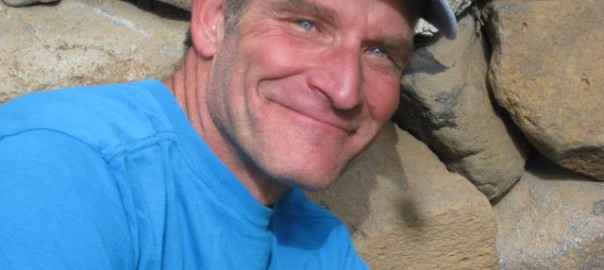
    Chris started rock climbing in the Lake Tahoe area over 25 years ago. After teaching family and friends the art of climbing for many years, he decided to turn his passion into his career. Spend a day with Chris as your rock climbing guide and take advantage of his enthusiasm, safe and patient teaching style and genuine love of the sport. Chris prides himself in getting even the “faintest of heart” up the rock. He has helped countless people, young and old alike, face their fears and realize the rush of accomplishment and the unique clarity of mind that comes with rock climbing.  During the winter months, Chris instructs and guides in Joshua Tree and in the summer he is based in the Truckee – Lake Tahoe area, where he is the lead rock climbing guide for NASTCChris is an American Mountain Guides Association (AMGA) Certified Single Pitch Instructor and has completed the AMGA Rock Instructor Course. He is also a Wilderness Medicine Institute – Wilderness First Responder.

    Call NASTC, 530.582.4772 to book your rockclimbing adventure with Chris.

  • NASTC Kids Race & Freeskiing Camp!

    NASTC Kids Race & Freeskiing Camp!
    Portillo has always been our summer home and many of our clients who have gone without their families have requested we run a separate NASTC Kids Camp! So we are! Kids and adults will be divided up during the day to ski with their own trainers and then come together in the evenings to enjoy family oriented fun at the hotel as well as family dinners.  Kids will run gates in the morning and continue to develop their skills, tactics and comfort on the mountain with an all-mountain free-skiing session in the afternoons.  They will have their own afternoon video session and tech talk, followed by a bunch of fun activities at the hotel. The same NASTC methodology of full immersion, multi-day holistic coaching will be applied to your child’s skiing and you can be sure that your child will make some significant improvements to their skiing.  This is a great way to spend quality family time, build memories and bond with your children.  Your child will come away from this trip not only a stronger skier, but more confident on and off the slopes, they will have made new friends and shared in a beautiful mountain experience that will likely never forget.